.svg)


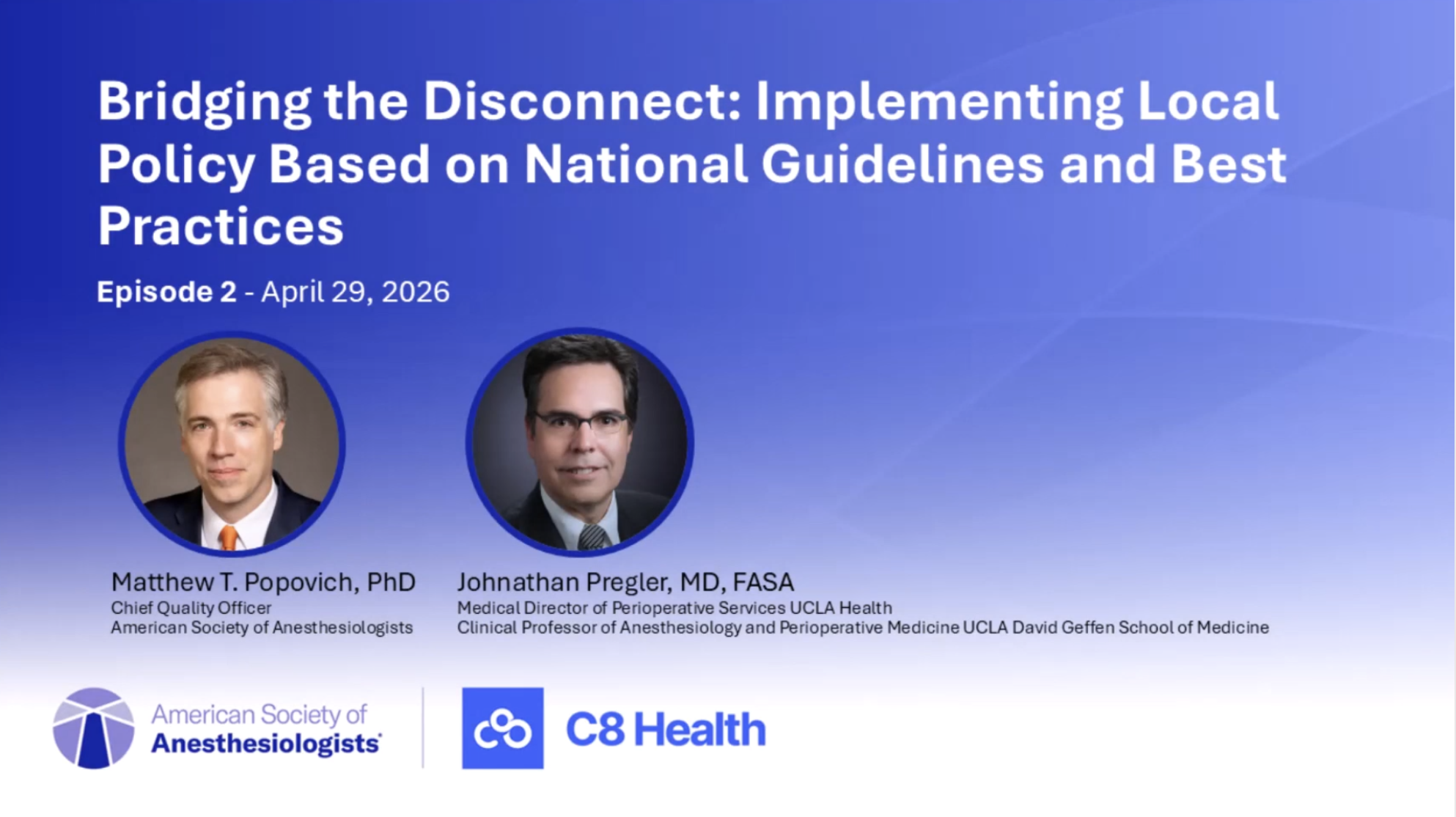
"Bridging the Disconnect” is a four-part interview series collaboratively produced by the American Society of Anesthesiologists and C8 Health. Hosted by Matthew T. Popovich, PhD, Chief Quality Officer of the American Society of Anesthesiologists, the series runs semi-weekly from July to August 2026 with a special guest offering fresh insights with each edition.
When medical expert groups like the American Society of Anesthesiologists (ASA) release new guidelines and policy positions every year, it’s imperative that local healthcare systems can assess and implement those updates in a timely manner. As the Medical Director of Perioperative Services at UCLA Health, Johnathan Pregler, MD, FASA, is no stranger to that challenge. Working collaboratively with the Senior Director of Operative Services, as well as a surgical representative, Dr. Pregler is responsible for the daily and long-term medical direction of seven inpatient and outpatient hospital campuses throughout Los Angeles.
In addition to his role at UCLA Health and its adjacent campus, the UCLA David Geffen School of Medicine, Dr. Pregler has served on a number of committees at the ASA alongside “Bridging the Disconnect host and ASA Chief Quality Officer Matthew T. Popovich, PhD. As Mr. Popovich put it, “Dr. Pregler has a broad understanding of the challenges many anesthesiologists and their groups face in implementing new guidelines and implementing best practices in their local departments.”
The importance of teamwork
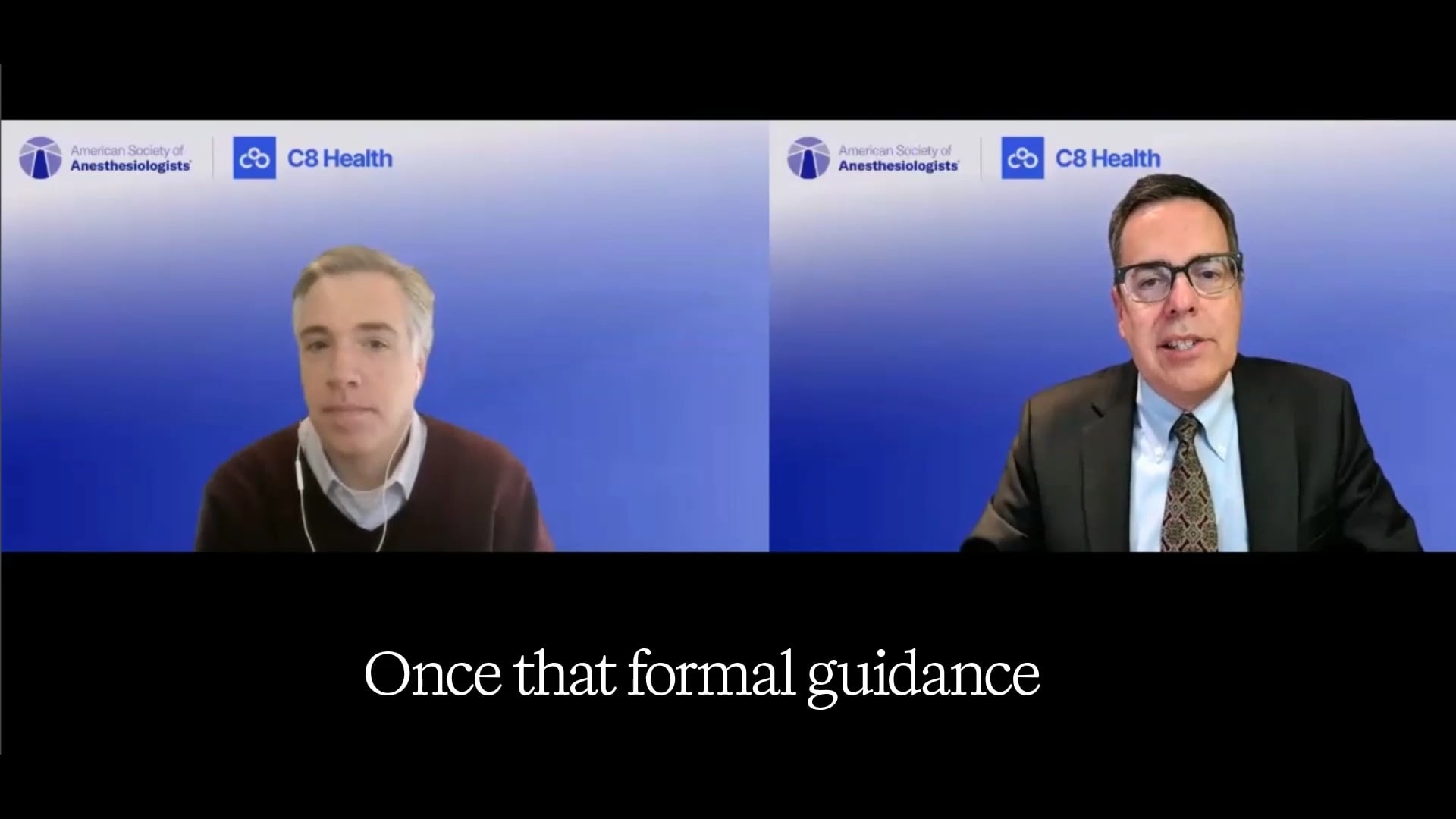
Because no clinician or department works in a vacuum, a team approach is necessary to consider any policy changes and translate national guidelines into local directives. For Dr. Pregler, the discussion starts in “several forums within our department” before expanding to include medical directors and academic divisional leads. Every guideline must be assessed from a patient safety perspective and evaluated for its impact on the work environment.
“Between these two groups, we come together with a consensus on our internal guidance and how we would apply a new policy or new procedure,” Dr. Pregler explained. From there, the conversation moves to a general faculty meeting for feedback and then on to an executive committee for review. Dr. Pregler stressed the need for transparency about this entire process, which in UCLA’s case includes meeting minutes, monthly department newsletters, and specific emails about the topic at hand.
Once hospital leadership has determined how to best implement new national policies at the local level, all guidance is put into “some form of document” that’s then made available via local intranet for immediate access. Medical directors are responsible for enacting these changes within their own facilities, serving as a frontline group for questions and concerns from clinical teams — and guidance is continuously reviewed for its ongoing impact.
C8 Health was designed to bridge the disconnect between policy and practice. As the leading clinical performance platform, C8 provides a shared playbook of hospital-approved data and seamlessly reduces mental friction at the point of care. Learn how C8 helped MetroHealth channel its information overload into streamlined workflow success here.
Mitigating pain points with credibility
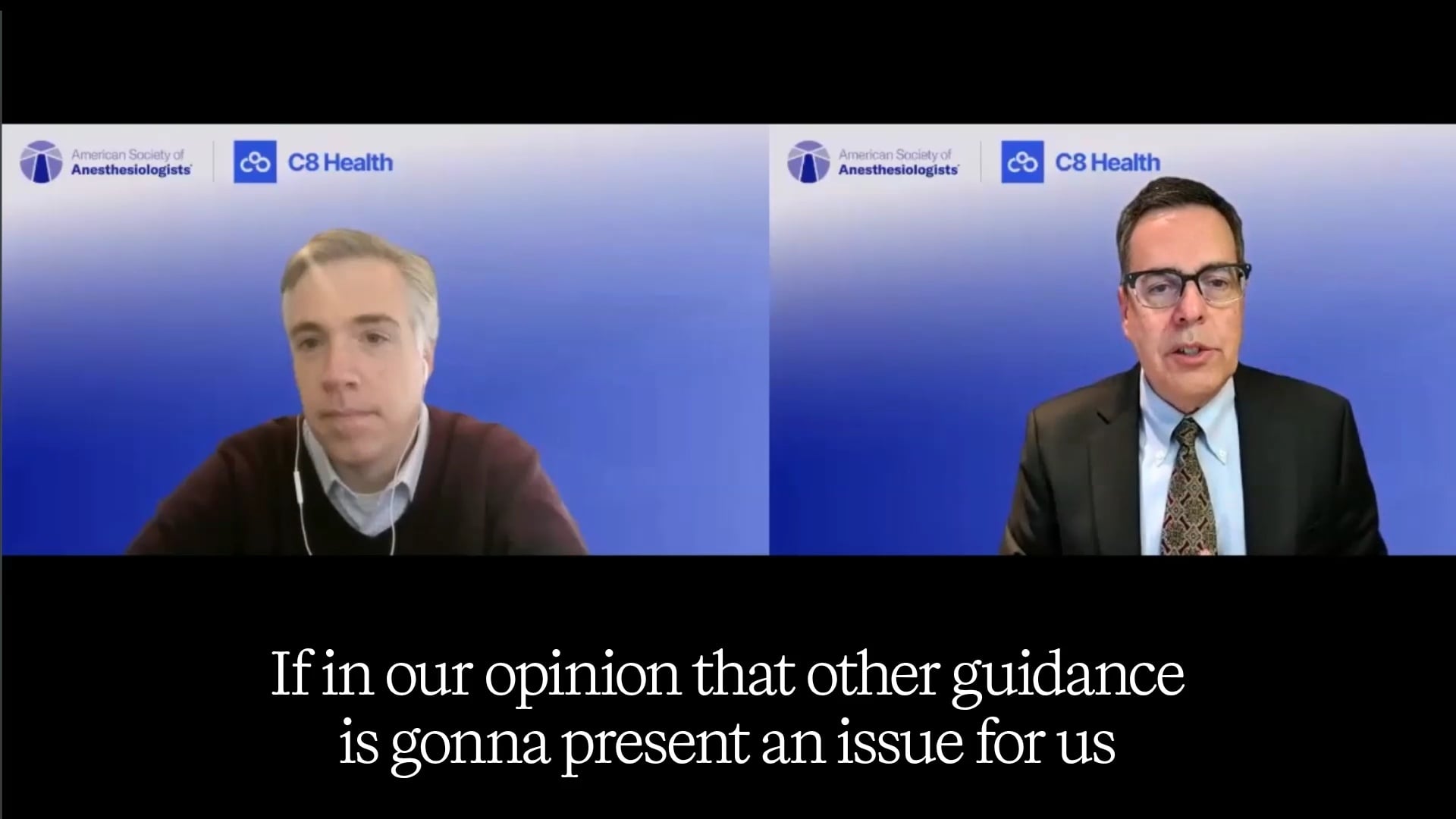
As Popovich pointed out, the ASA is just one of many organizations that issues policy updates and new guidelines, and these groups sometimes contradict one another. Experts may disagree on the best path forward, and when you receive guidance from another medical society, “you have to involve that group within your system,” according to Dr. Pregler. He also recommends looping in the regulatory affairs department to discuss “the pros and cons of implementing something at face value.”
In some cases, the cons outweigh the pros. In that case, it’s important to clearly explain your position. “If, in our opinion, that other guidance is going to present an issue for us with quality patient care, then our department will draft a position document in conjunction with our regulatory people and the other involved organizational people,” Dr. Pregler said. When dissenting, you must be able to defend your position and find a way forward that satisfies all clinicians and regulatory bodies.
Dr. Pregler listed USP Chapter 797, which concerns the compounding of medications, as an example of such a situation. “USP guidance is classic for being misinterpreted or misapplied because it applies to pharmacy, and it also applies to the preparation and administration of medications across the health system,” he explained. When this particular standard was released, Dr. Pregler and his team “looked at our own practice at UCLA” to gauge the hospital’s current sterile compounding practices. “We developed our own opinion… and took that to our pharmacy leadership and regulatory staff and came to an agreement on the differences between administration and immediate-use compounding.”
While leadership at UCLA Health acknowledged that they could use more education on the subject, they wanted to ensure that the education would be at the appropriate level for its clinicians. In the end, the ASA created an online module that anesthesiologists could complete quickly and easily, without redundant information. This module was then approved as an alternative resource for department members and written into the health system’s guidance.
“In order to serve your organization the best, you need to be honest about what your practice is,” Dr. Pregler said. “In the end we really acknowledged we needed the training, but we worked to make it as efficient and easy to complete as possible for our staff.”
How C8 Health bridges the disconnect

As Dr. Pregler explained in episode two of “Bridging the Disconnect,” evaluating and dispersing updated national guidelines at a local hospital system requires a shared playbook. C8 Health is that playbook. By aggregating all hospital-approved knowledge and making it accessible to every member of the care team, regardless of role or department, C8 helps clinicians mitigate friction at the point of care. To learn more about how C8 addresses knowledge chaos and improves care consistency, download our report: The State of Healthcare Quality Improvement.
You can watch the full interview in the video at the top of this page. C8 Health would like to thank Dr. Johnathan Pregler, Dr. Matthew T. Popovich, and the American Society of Anesthesiologists for their valuable time and perspective. You can learn more about the ASA at https://www.asahq.org.