.svg)


Hospital-acquired infections (HAI) cost US hospitals an estimated $40 billion every year, and nearly a third of those cases are urinary tract infections (UTI). Approximately 75% of UTIs developed in hospitals correlate with the use of urinary catheters, making catheter-associated urinary tract infections (CAUTI) an all-too-common issue that increases morbidity, mortality, and length of stay (LOS). With an estimated cost of $4,694 to $29,743 per patient, every CAUTI puts an undue burden on already-strained hospital budgets. The financial impact is compounded by legal liability and reputational damage that can erode patient trust over time.
The reason so much of this financial burden falls on hospitals is because 17% to 69% of CAUTI incidents are preventable, “which means that up to 380,000 infections and 9,000 deaths related to CAUTI per year could be prevented,” according to the CDC. The only way to mitigate the cost of CAUTI is through the use of standardized, evidence-based prevention protocols — but that means hospitals must overcome “knowledge chaos” and ensure that all members of the care team are working from a shared playbook.
What are catheter-associated urinary tract infections?
According to Johns Hopkins Medicine, “A catheter-associated urinary tract infection (CAUTI) occurs when bacteria or other germs enter the patient’s urinary catheter and cause infection.” CAUTIs “account for almost half of all hospital-acquired infections,” and patients experience severe symptoms like pain below the stomach, fever, burning during urination, and more frequent urination.
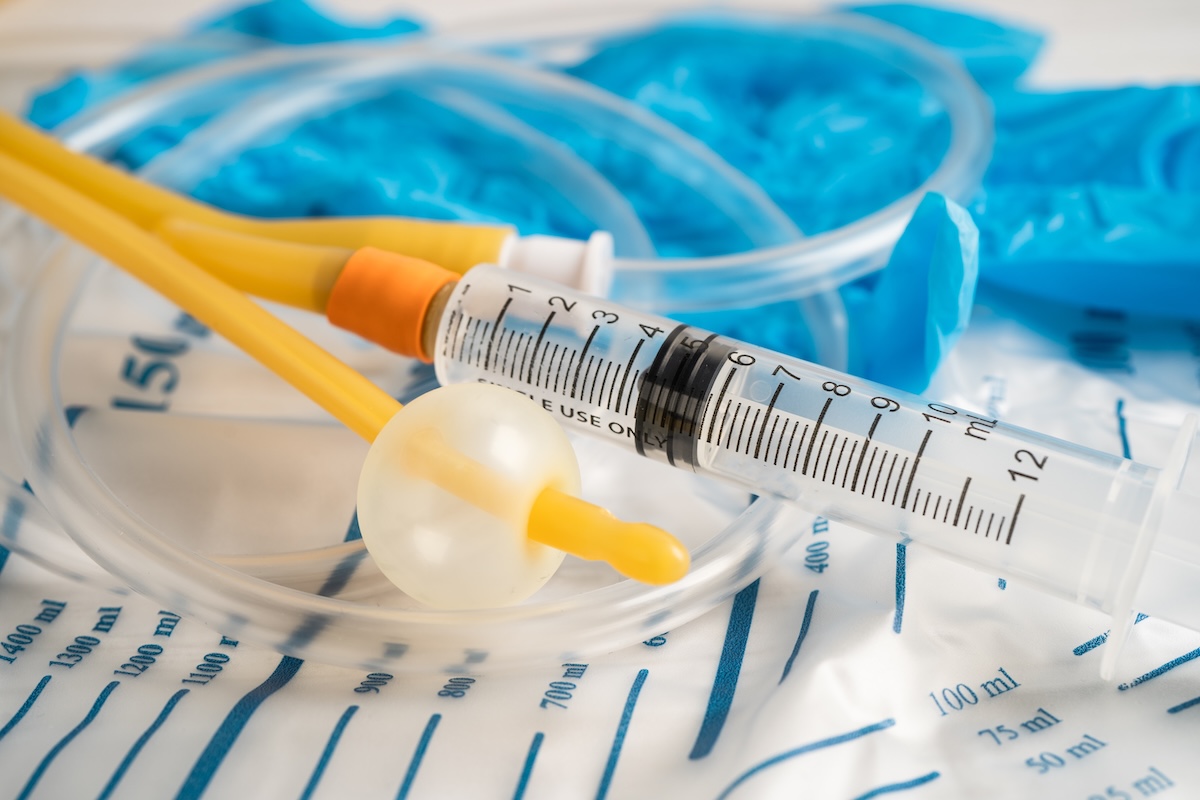
Urinary catheters are primarily used in patients who are unable to drain their bladders manually due to incontinence, prostate issues, disability, and a number of other health complications. There are two types:
- Intermittent catheters: These basic, single-channel tubes are used only at the times patients need to drain their bladders. After drainage, the catheter is removed.
- Indwelling catheters: These catheters remain inserted for a longer period of time and collect urine in a bag. Indwelling catheters such as Foley catheters “significantly increase the risk of iatrogenic infection,” particularly in ICU patients at risk for CAUTIs.
The CDC calls prolonged use of urinary catheters “the most important risk factor for developing a CAUTI,” which is part of the reason why indwelling catheter patients are especially susceptible to catheter-associated urinary tract infections. However, intermittent catheter users are still at risk, particularly if hygiene protocols aren't consistently followed for every insertion and removal.
According to available CAUTI statistics, cather-associated UTIs have a lower morbidity and mortality rate when compared to many other HAIs, such as central line-associated bloodstream infections. However, “The high prevalence of urinary catheter use leads to a large cumulative burden of infections with resulting infectious complications and deaths,” the CDC states. The current data on CAUTIs shows that catheter-associated infections are responsible for between 9,000 and 13,000 deaths per year in the United States, and complications from these infections are the leading cause of sepsis in adults over 65.
How much does CAUTI cost hospitals?
CAUTI incidents are estimated to incur extra medical costs of between $4,694 and $29,743. That adds up to $340 million to $450 million per year in the United States. In 2008, the Centers for Medicare and Medicaid Services (CMS) discontinued additional payments for preventable hospital-acquired infections, so much of that financial burden falls on the healthcare centers themselves.
Beyond the direct financial burden, the cost of CAUTI extends well beyond hospital balance sheets. The CMS maintains the Five-Star Quality Rating System to help patients and their families easily compare practitioners, medical centers, and nursing homes. CMS’ rating system takes the occurrence of specific HAIS, including CAUTI, into consideration when calculating scores. In other words, excessive catheter-associated UTIs can negatively impact a hospital’s score and damage public trust in your institution.
How to prevent catheter-associated urinary tract infections
The Agency for Healthcare Research and Quality, CDC, and numerous other experts have published CAUTI prevention strategies that stress the need for evidence-based best practices for urinary catheter insertion and maintenance. Strategies to prevent catheter-associated urinary tract infections in acute care hospitals include:
- Reassess the need for a urinary catheter: Clinicians should consider patients’ risk factors for CAUTI and only use catheters when absolutely necessary. A 2022 study further recommends “periodic, usually daily, review of the necessity of continued catheterization.”
- Practice non-traumatic placement: All members of the care team should be trained on proper insertion, maintenance, and removal of urinary catheters.
- Make supplies readily available: Bladder scanners, bed pads, skin products, and other essential catheter supplies should be easy to reach for doctors and nurses.
- Use a daily checklist: Established guidelines like the “Bundle (ABCDE) Checklist” have been shown to reduce the occurrence of CAUTI incidents by increasing compliance with prevention best practices.
- Leverage new catheter technologies: Using a silver alloy hydrogel catheter, or other noble metal coatings, has been shown to reduce rates of CAUTI; though such interventions are complemented by process-oriented strategies.
- Use adjunctive antimicrobial and antiseptic strategies: Using a or chlorhexidine for meatal cleaning has proven effective in reducing CAUTI incidents.
Implementing a new quality intervention to leverage chlorhexidine meatal cleaning techniques could have immediate, substantive ROI. Even assuming 80% compliance with the new process, a large institution would see millions in savings.
Implementing CAUTI interventions: What’s holding hospitals back?
The CDC estimates that 17–69% of CAUTIs are likely avoidable, with studies like the one highlighted above demonstrating even higher incident reduction. The challenge isn't the absence of evidence-based protocols; it's ensuring that every member of the care team, on every shift, can access and act on them at the moment it matters.
Prevention of catheter-related urinary tract infections requires the right tools and infrastructure. Evidence-based practices, guidelines, and daily checklists must be easily accessible for all members of the care team — which is a problem if your hospital doesn’t have a consistent data management policy. For example, perioperative nurses responsible for the ongoing care of CAUTI patients may find that critical documentation is spread across binders, inboxes, and various digital systems. The resulting knowledge chaos leads to gaps in care consistency, which increases costs and negatively impacts hospital ratings.
To fight knowledge chaos, C8 Health surfaces the right CAUTI prevention protocol directly to the clinician who needs it, whether that's a checklist, an updated guideline, or a catheter reassessment reminder. However, preventable catheter-associated urinary tract infections are only a symptom of the larger issue: healthcare has a knowledge management problem. Outdated, inefficient systems are negatively impacting clinical practices and patient outcomes. To learn more about healthcare’s knowledge problem and gain practical insights for improving knowledge management, download our white paper.