.svg)


In a hospital setting, infections are a constant threat. Hospital-acquired infections (HAI) affect one in 31 patients every day, and central line-associated bloodstream infections (CLABSI) are among the most serious. With a mortality rate of 12% to 15% — which climbs even higher for ICU patients — these central line infections increase the length of patients’ hospital stays and drive up costs for healthcare systems.
The CDC recommends strict adherence to infection control guidelines in order to minimize the occurrence of CLABSI. However, healthcare teams face a number of barriers when it comes to consistent implementation of evidence-based protocols, among them insufficient training and inadequate knowledge management.
If you’re wondering how to prevent CLABSI when central lines are needed to deliver life-saving medication, nutrition, and hydration, Quality Improvement (QI) may be the answer. Using a structured, evidence-based approach helps teams effectively implement CLABSI prevention guidelines and reduce negative outcomes. However, supporting CLABSI Quality Improvement initiatives requires infrastructure, budget, and buy-in across the institution.
Understanding central line infections
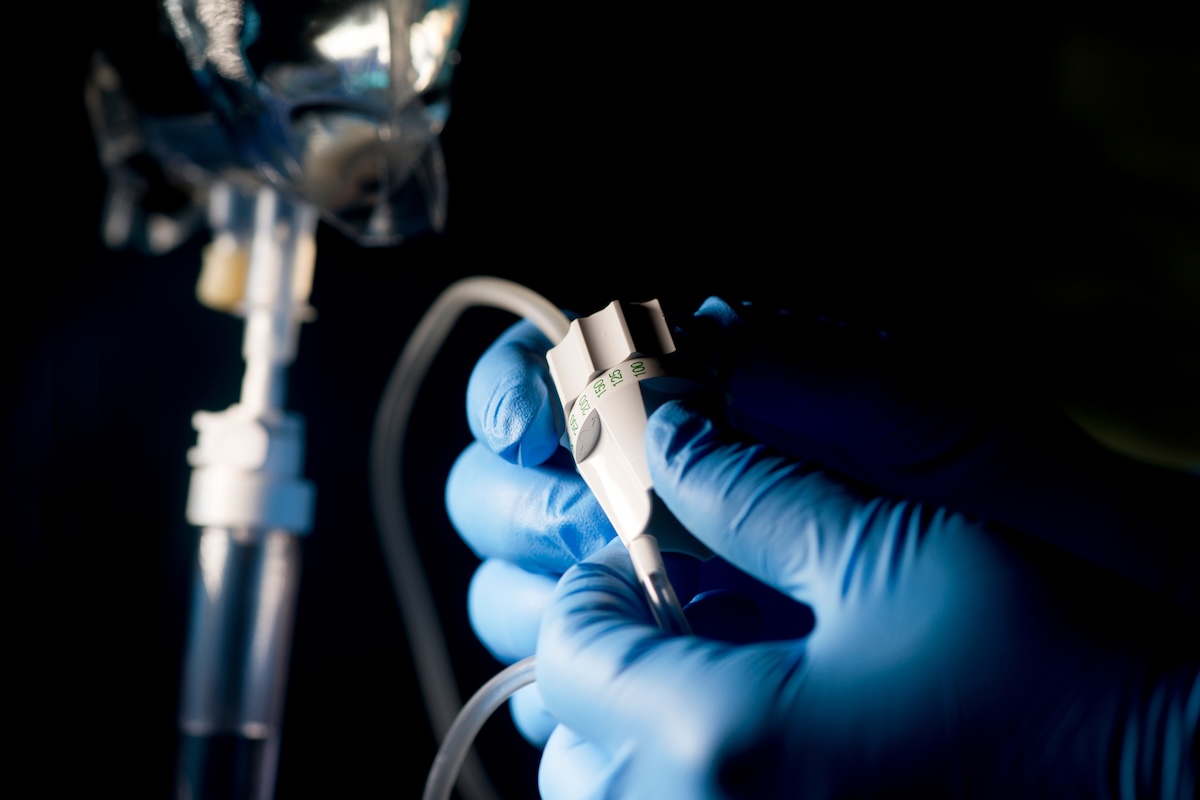
Central lines, also known as central venous catheters, are inserted by healthcare providers to treat a variety of medical issues. They can be used to deliver nutrition and hydration; they offer pain relief; they can even be used to treat infection, ironically. What makes central lines so effective is also what makes them so potentially deadly: They generally access major veins near the patient’s heart, creating an entryway for infection-causing germs. And because central line patients are often already critically ill, they’re at greater risk for developing complications.
Typical CLABSI symptoms include fever, red skin, and soreness around the central line site. Drainage, seizures, nausea, and vomiting can also result from central line infections. Once an infection has occurred, the care team must deliver prompt CLABSI treatment in the form of antibiotics, antifungals, or possible removal of the central line.
Published CLABSI statistics show that they are among the most devastating hospital-acquired infections. According to the CDC, “Central line-associated bloodstream infections (CLABSIs) result in thousands of deaths each year and billions of dollars in added costs to the U.S. healthcare system,” despite being largely preventable. The Agency for Healthcare Research and Quality estimates that in US intensive care units alone, 28,000 patients a year die from CLABSI complications. A 2023 study found that the 30-day CLABSI mortality rate among 283 patients was 18.8%.
The cost of CLABSI
In addition to being deadly, central line infections are an expensive burden on already-strained hospital budgets. The cost of CLABSI per patient is between $17,896 and $94,879, making them far more expensive than pressure ulcers and surgical site infections. Some of those costs are associated with increased length of stays (LOS) following CLABSI, which could mean an extra month in the hospital — the mean excess LOS is 24.9 days.
Published studies stress the importance of CLABSI prevention guidelines such as “proper insertion and meticulous maintenance of central lines.” With CLABSI bundles in place, incident density rate has been shown to reduce by 56%–87%. The CDC’s recommended infection control guidelines outline such control measures in detail.
As outlined in the example calculations above, institutions can recoup millions by effectively implementing CLABSI infection control measures. With such clarity of evidence and financial incentive, the question remains why these practices aren’t universal. The problem isn’t a lack of documentation on CLABSI prevention best practices; instead, issues like “inadequate hospital infrastructure, resource and workforce shortages, education of staff, inadequate in-service IPC training and supervision, and large visitor numbers” can make it difficult for all members of the care team to align and ensure guidelines are being carried out step by step. Addressing diffuse systemic issues like these necessitates rigorous quality improvement initiatives.
What is Quality Improvement?
The words “quality improvement” have a very specific meaning within the medical context. Johns Hopkins Medicine defines Quality Improvement as “a structured, systematic approach to improving how care is delivered by testing changes in real practice settings and measuring their impact over time.” The core tenets of QI are improving processes and outcomes, letting data and evidence guide decisions, making small, scalable changes to test their results, and then inserting these changes into general workflows.
QI initiatives have been used in heart attack prevention, reducing unnecessary Cesarean deliveries, reducing asthma-related deaths, and avoiding adverse drug reactions, just to name a few examples. Johns Hopkins lists six steps of the improvement process:
- Define the opportunity for improvement
- Assess current performance
- Identify why the problem is occurring
- Design and test an improvement approach
- Evaluate the results
- Refine, sustain, or expand the change
Once you understand the purpose of QI initiatives, the right Quality Improvement platform can help automate and scale those interventions. You can then use the general structure and apply it to a specific goal: in this case, implementing CLABSI prevention best practices and making that information readily available to all members of the care team.
Implementing a CLABSI Quality Improvement project
Step 1: Define the opportunity for improvement
Generally speaking, this is the QI step in which you determine the problem you’re trying to solve. In this case, you already know the answer: reducing the occurrence of central line infections. Prevention is key to reducing the cost of CLABSI and improving outcomes for patients with central venous catheters.
Step 2: Assess your current performance
You’ll need a thorough understanding of your existing processes before trying to improve them. Research the current CLABSI prevention efforts and their outcomes. How many preventable infections are occurring in a given time period and how has that impacted the average LOS for central line patients? How about costs and mortality rates? Once you have a clear picture of the current situation, you can work toward improvement.
Step 3: Identify why the problem is occurring
At this point, you can use the information gathered during your assessment to identify commonly missed steps or other frequent mistakes in care. Is there already an established protocol for how to prevent CLABSI in place? If so, where — and why — are clinicians missing critical steps? Is “knowledge chaos” like fragmented systems, inconsistent training, and lack of protocol visibility contributing to excessive central line infections? Once you know the “why,” you can design a solution.
C8 Health's survey of 100 clinical quality leaders found that 76% cite exactly these barriers as the primary obstacle to QI success. Download the full report →
Step 4: Design and test an improvement approach
Once you’re armed with data and have identified areas for improvement in CLABSI prevention, find a solution that addresses the key pain points in the current protocol. This might mean:
- Using the CUSP method: The Comprehensive Unit-based Safety Program (CUSP) combines increased collaboration, evidence-based best practices, and safety protocols. Developed by Johns Hopkins researchers, this five-step program has been successfully used to dramatically reduce bloodstream infections throughout the United States.
- Strict adherence to evidence-based insertion and maintenance: A 2026 study established proven CLABSI prevention bundles that can serve as a checklist for your team. From optimal placement to hand hygiene to daily review of central line necessity, these bundles are made up of small steps that have an outsized impact on patient incomes.
- Real-time access to checklists and protocols: Establishing protocols isn’t enough — everyone on the care team must be able to access them. The right technology platform should seamlessly connect to your existing tools, address unwanted variability in care, and make it easy to share knowledge. A platform that tames knowledge chaos should give every member of the care team mobile access to the hospital's most up-to-date, clinician-approved CLABSI maintenance bundle.
- Intuitive digital access: Checklists, protocols, and other digital tools only work if clinical teams actually use them. A 2026 Quality Improvement study published in JMIR Human Factors demonstrates how the right infrastructure overcomes this adoption hurdle. Evaluating the deployment of C8 Health at The MetroHealth System, researchers found the platform achieved an 88.8% active clinician adoption rate, which turned the anesthesiology department’s information overload into streamlined success.
When you’ve determined the best approach for preventing central line infections at your hospital, test out the new system in a single department during a trial period. Because ICU patients are particularly vulnerable to CLABSI, that may be the best place to start.
Step 5: Evaluate the results
After the trial period ends, it’s time to crunch the numbers. Gather the data and compare metrics from your trial department to the ones you gathered at the beginning of the QI project. It’s also important to gather testimony from clinicians in the department to see if there was any unwanted friction in accessing protocols or working together as a team.
Step 6: Refine, sustain, or expand the change
The results of your single-department test will determine your next steps. First, address any pain points from medical teams in order to streamline the process as much as possible. If your metrics aren’t improving and CLABSI remains a significant challenge, make adjustments to accommodate the plan.
You may have to think outside the box to find solutions. For example, even if the care team is disinfecting surfaces as frequently as recommended, damaged surfaces can be difficult to clean effectively, as was the case in one study. In other cases, inadequate technology and siloed information can make collaboration and consistency especially challenging. Examine the results from every angle to find the barriers to success.
Once you’ve achieved your goals in a single department, you can begin to scale outward. Repeat the process and roll out changes to the entire hospital. The amount of time this takes varies depending on the size and infrastructure of the healthcare center, but after several months, you’ll have completed the QI project and implemented life-saving CLABSI prevention guidelines at scale.
Improve CLABSI with C8 Health
Reducing the occurrence of central line infections positively impacts patients and clinicians, reduces the length of hospital stays, and ultimately cuts down on unwanted costs. However, you can’t successfully implement a CLABSI Quality Improvement project without a shared playbook. Hospitals need software platforms specifically designed with the industry in order to ensure evidence-based practices are being carried out every step of the way.
C8 Health is an AI platform that aggregates hospital-approved knowledge and makes it accessible to all members of the care team, regardless of role or department. Founded by clinicians and healthcare technologists who have struggled firsthand with knowledge chaos in medical settings, C8 Health standardizes training and improves care consistency. To learn more about how AI accelerates QI and automates quality interventions at scale, download our report: The State of Healthcare Quality Improvement.